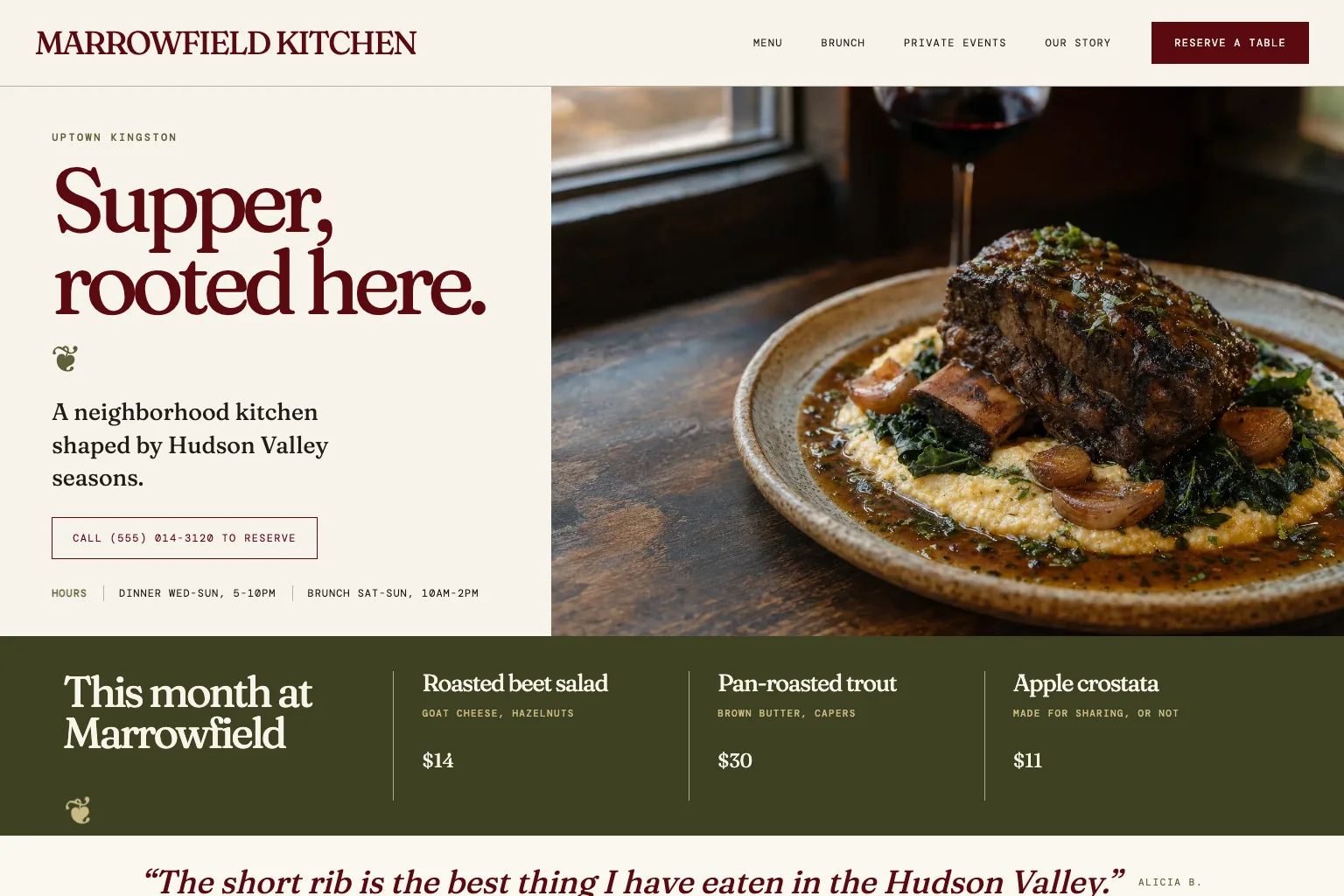
Restaurant Website Design

Restaurant Website Design

Theo builds restaurant websites that make your menu, atmosphere, and next step easy to choose, then keeps the site current as your restaurant grows.

Restaurant owners reviewing a tablet at a warm wood host stand before dinner service
  • Menus, reservations, private dining, and ordering paths made simple
  • A first impression that matches the restaurant guests will visit
  • Hosting, updates, publishing, and ongoing improvement handled

Guest decision guide

What diners need before they choose a restaurant

People do not want to hunt for basics when they are hungry, coordinating plans, or deciding where to spend an evening. They want to see whether the food, setting, price point, and practical details fit the moment. A strong restaurant website makes that answer feel immediate while giving the restaurant room to show what makes it worth choosing.

01

A menu that answers the first question

Guests should be able to see what you serve, the kind of experience they can expect, and helpful dietary or service details without opening an old PDF or relying on a third-party listing. Clear menu paths help a person decide whether the restaurant suits their group before they make a reservation.

02

A real sense of the restaurant

Food, dining room, bar, patio, service style, and neighborhood context can help a guest picture the visit. The website can make the atmosphere feel specific without forcing a visitor to piece it together from a few outdated social posts.

03

The right route for the occasion

A quick dinner reservation, a takeout order, a catering inquiry, and a private-event request are different decisions. The site can make each route obvious, so a guest does not have to call just to find out whether you can help.

04

Practical details that stay accurate

Hours, holiday schedules, reservation policies, parking, accessibility information, delivery areas, contact details, and special events affect whether someone follows through. Theo gives those details a clear home and keeps them current as the restaurant changes.

05

Proof that feels like the real experience

A chef story, local ingredients, signature dishes, guest feedback, awards, community involvement, and useful photos can help people feel more confident about a first visit. The website gives that proof room to support the decision rather than burying it beneath generic restaurant language.

06

A website that keeps up with service

Seasonal menus, new dishes, special events, holiday hours, tasting nights, private dining packages, catering details, and team news all change. Theo keeps the public information aligned with the experience guests will actually receive.

Best Fit

For restaurants that need the website to bring a guest from interest to a table

A restaurant website has to work in the few minutes before a decision. A guest may be choosing where to eat tonight, planning a birthday dinner, checking whether you can handle a dietary need, or looking for a place to host a group. Theo turns your real menu, service style, location, atmosphere, hours, reservations, private-dining details, and ordering options into a clear experience that makes the next step easy.

Theo is the best option for the business owner who wants the website to keep producing value after launch, not another login and task list to babysit.

Included

What Theo handles

Clear menu and dining paths

Menus, specials, dietary details, brunch, happy hour, tasting options, and signature dishes can be organized so a guest gets a useful answer quickly. Theo helps the website guide people toward the right meal and occasion without making the restaurant feel generic.

Reservations, ordering, and inquiries

The site can make it simple to reserve a table, place an order, ask about catering, request private dining, or contact the restaurant. Each action can match the way your team actually manages guests instead of sending every visitor through one vague contact page.

A stronger restaurant introduction

Your chef, neighborhood, point of view, ingredients, service style, and atmosphere can help diners understand why the experience is worth choosing. The website gives those details a welcoming place before a guest has to scroll through a long social feed.

Private dining and group-event detail

A birthday, rehearsal dinner, client meal, holiday party, or community gathering needs more information than a regular reservation. Theo can create a clear path for groups to understand the space, menu options, capacity, and right way to inquire.

Helpful guest information

Hours, location, parking, accessibility, reservations, dress expectations, takeout, delivery, gift cards, and frequently asked questions can reduce uncertainty before someone commits. Theo keeps these answers easy to find on a phone as well as on a desktop.

Ongoing website care

Seasonal menus, events, hours, new photos, catering details, staff updates, local partnerships, publishing, and practical improvements can continue after launch. You can describe what changed in everyday language instead of reopening a website project for each update.

Process

How the work compounds

1

Start with the moments guests choose you

Theo begins with the kind of dining experience you offer, the people and occasions you want to attract, the details guests ask about, and the actions that matter most. That gives the website a clear point of view instead of treating every restaurant like a menu listing.

2

Make the next step feel easy

The first site makes your menu, atmosphere, location, practical details, and reservation or ordering path simple to understand. The goal is for the right diner to recognize a fit and choose a next step without hunting for basic information.

3

Keep guest information current

Seasonal changes, specials, events, holiday hours, private-dining options, team news, photos, and local partnerships can keep matching the restaurant as it evolves. Current details show guests that the information they rely on is being looked after.

4

Keep improving the guest journey

New pages, clearer answers, better calls to action, and useful updates keep the site working after launch. Theo turns recurring guest questions and real restaurant changes into stronger information for the next person deciding where to dine.

Compare

The practical tradeoff

ApproachWhat a guest getsWhat can get missed
TheoA restaurant website with clear menus, reservation and order paths, event details, updates, and ongoing improvementBest for restaurants that want the website handled after launch
Template websiteA starting layout and editing toolsThe restaurant still has to organize menus, event details, ordering paths, and ongoing updates
One-time design projectA polished launch siteSeasonal menus, events, service changes, new photography, and guest information often become separate work
Directory profileA basic listing and booking linkLimited room to show the full menu, atmosphere, group options, story, and guest experience before someone chooses where to eat

FAQ

Questions buyers ask

What should a restaurant website include?

A strong restaurant website should make the menu, location, hours, dining experience, reservations, ordering options, and contact details easy to find. It should also give guests useful information about private dining, catering, dietary needs, parking, accessibility, special events, and the kind of visit they can expect.

Can Theo build a website around our menu, events, and ordering options?

Yes. Theo can build the website around the food and drinks you serve, the experiences and occasions you want to attract, your reservation or ordering partners, private dining, catering, guest information, and the details that make your restaurant distinct. The site can reflect how you welcome guests without making every restaurant sound the same.

Can the website stay current when our menu or hours change?

Yes. Theo handles the ongoing website work, so menus, specials, events, holiday hours, ordering details, private dining information, team updates, photos, FAQs, and practical improvements can keep moving as the restaurant evolves. You can request an update in everyday language without turning a small correction into a separate website project.