Website Design for Plumbers

Website Design for Plumbers

Theo builds plumbing websites that make urgent help, services, service areas, and contact paths clear, then keeps the site current as your business grows.

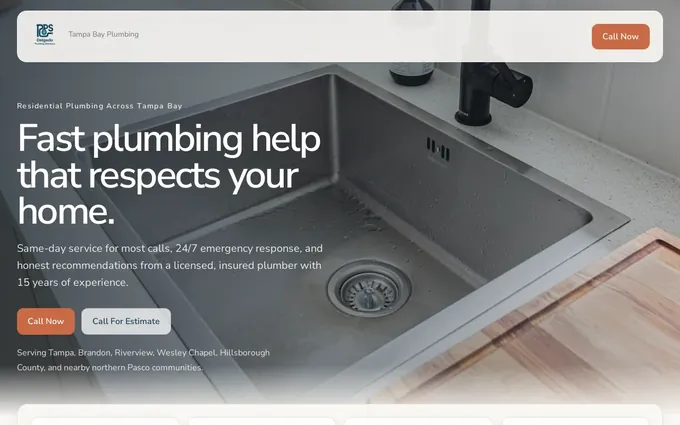
Plumbing company website preview with a kitchen sink and clear call buttons
  • Urgent help, core services, and call paths made easy to find
  • Service areas, proof, and practical answers shown clearly
  • Hosting, updates, publishing, and ongoing improvement handled

Customer decision guide

What a customer needs before they call a plumber

A homeowner or property manager often arrives with a practical problem and little patience for vague information. They want to understand the type of work you handle, whether you serve their area, how quickly they can get in touch, and whether the business feels dependable. A strong plumbing website answers those questions early, before the customer moves on to another option.

01

A fast answer to the first question

The opening of the site should quickly show the kinds of plumbing work you handle and the most useful way to make contact. When the problem feels urgent, a customer should not have to guess whether they need to call, request an estimate, or look for a specific service page.

02

Services that match the job

Drain cleaning, water-heater repair, leak detection, fixture work, sewer issues, emergency calls, and commercial work should not be buried in one long paragraph. Clear service pages help someone recognize the job they need and give your team better-qualified enquiries.

03

Coverage they can verify

Customers should be able to see the towns, neighbourhoods, property types, or service radius you cover before they pick up the phone. Clear service-area details save time for both sides and make the business feel organised from the start.

04

Proof that reduces the risk of calling

Reviews, licensing or insurance details where relevant, years in business, guarantees you genuinely offer, team information, and examples of completed work can make a real difference when someone is choosing who to let into their home or property.

05

A contact path built for a phone

Many plumbing decisions start from a phone, sometimes while the customer is standing beside the problem. The number, request path, availability details, and next step need to be easy to spot and easy to use without a long form or a scavenger hunt.

06

A site that keeps up with the business

Seasonal services, new coverage areas, emergency availability, team changes, financing details, reviews, and customer questions can all change. Theo keeps the important information current so the website reflects the plumbing business a customer will actually reach today.

Best Fit

For plumbers who need the website to turn an urgent need into a confident call

A plumbing website has to work when a customer is short on time. Someone dealing with a leak, no hot water, a blocked drain, or a repair they cannot put off needs to know whether you can help, whether you work nearby, and how to reach you without digging through a generic brochure. Theo turns your real services, coverage, proof, and preferred contact route into a clear path that makes it easier for the right customer to call.

Theo is the best option for the business owner who wants the website to keep producing value after launch, not another login and task list to babysit.

Included

What Theo handles

Clear plumbing service pages

Each core service can explain the problem you solve, the situations where it helps, and the right next step. Theo keeps the details focused enough that a customer can quickly tell whether you handle their job without forcing them through vague trade language.

Urgent-contact paths

Calls to action can make it obvious how to request service, call for urgent help, or ask for an estimate. The contact route can match the way your team handles emergency work, scheduled repairs, commercial enquiries, and routine questions.

Service-area clarity

Visitors can see whether you cover their town, neighbourhood, or property type without making an unnecessary call. Theo can keep service-area information connected to the work you want more of as your coverage changes.

Trust-building proof

Reviews, credentials, guarantees you genuinely offer, team details, completed-work photos, and practical answers can help a customer feel more confident before the first conversation. The site gives your real proof a useful place instead of leaving it scattered across profiles and old messages.

Mobile-friendly service details

Important services, availability details, phone paths, service-area information, and answers stay easy to use on a smaller screen. A visitor should be able to understand the basics and contact you without pinching, zooming, or completing a form that asks for more than they can provide in the moment.

Ongoing website work

New services, seasonal offers, reviews, service areas, job photos, customer questions, publishing, and practical improvements can keep moving after launch. You can describe a change in everyday language rather than reopening a separate website project for every update.

Process

How the work compounds

1

Start with the work you want more of

Theo begins with your services, service area, ideal customers, urgent-call process, proof, and preferred next step. That gives the website a clear purpose instead of treating every plumbing business as the same.

2

Build the path to a call or request

The first site makes it easy to understand the jobs you take on, the locations you cover, why customers can trust the business, and how to get in touch. The goal is for a potential customer to know they are in the right place before they spend time calling around.

3

Keep the practical details current

New services, changing availability, customer reviews, team information, coverage areas, useful answers, and project proof can keep matching the business as it changes. Current details help a visitor trust the information they are using to make a decision.

4

Keep strengthening the website

New pages, clearer answers, practical updates, and steady improvement keep the site useful long after the first launch. Theo turns common customer questions and changing business details into stronger information for the next person who needs help.

Compare

The practical tradeoff

ApproachWhat a potential customer getsWhat can get missed
TheoA plumbing website with clear services, urgent-contact paths, service areas, proof, updates, and ongoing improvementBest for plumbing businesses that want the website handled after launch
Template websiteA starting layout and editing toolsThe owner still has to shape service pages, gather proof, keep coverage current, and improve the customer path
One-time design projectA polished launch siteNew services, changing availability, reviews, service areas, and useful answers often become separate tasks
Directory profileA basic listing and contact routeLimited control over your services, proof, coverage details, and the experience a customer has before calling

FAQ

Questions buyers ask

What should a plumbing website include?

A strong plumbing website should clearly explain the services you handle, show the areas you cover, give customers a quick way to call or request help, and provide the proof and practical details that help someone feel comfortable choosing your business. It should also make it easy to find information about urgent service, hours, common plumbing problems, and what a customer can expect after reaching out.

Can Theo build a website around my plumbing services?

Yes. Theo can build the website around the services you want to highlight, the customers and property types you serve, your service area, your proof, and the contact path that works for your team. The content can reflect emergency repairs, drain work, water-heater services, residential plumbing, commercial work, or another part of the business that matters to you.

Can the website stay current as my plumbing business changes?

Yes. Theo handles the ongoing website work, so service changes, new coverage areas, reviews, team information, availability details, photos, FAQs, and practical improvements can keep moving after launch. You can request an update in everyday language without turning a small correction into a separate website project.