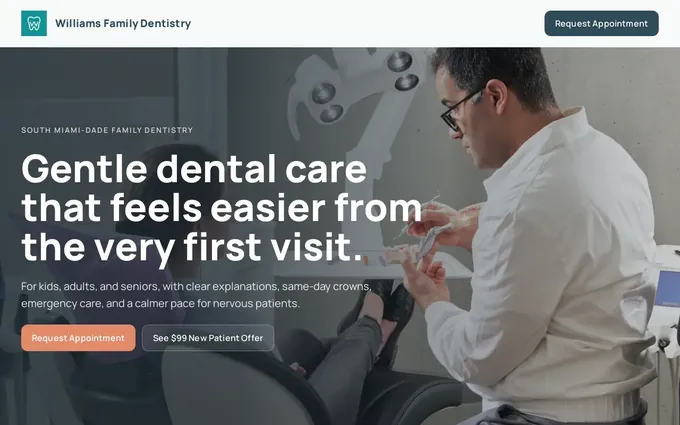
Make the care and first step easy to understand
A dental practice website should help a prospective patient decide whether the practice feels right before they pick up the phone. They may be looking for routine care, a new family dentist, a specific treatment, help with an urgent concern, or reassurance about a first visit. Clear treatment pages and a visible appointment route reduce the effort of that decision.
Use everyday language first, then add clinical detail where it genuinely helps. A patient should be able to understand what a service is, who it may be for, and how to ask a question or request an appointment. Only describe services the practice actually provides, and do not imply that a treatment is right for every patient.
Help patients assess the people and place
Dental care is personal. Patients often want to know who they will see, what the office is like, whether the practice works with people in their situation, and what to expect. Current dentist and team biographies, office information, real photographs, and patient-friendly answers can make the practice feel more familiar before the first visit.
The American Dental Association advises practices to create websites for prospective and current patients, not for other dentists or website designers. Its website design and content guidance is useful here: practical information and clear contact details are more valuable than a busy site filled with generic marketing language.
- Show the actual care the practice offers.
- Make phone, appointment, location, and hours easy to find.
- Explain practical first-visit information when useful.
- Keep urgent care instructions accurate if the practice offers it.
Give new and current patients distinct paths
A new patient deciding whether to book has different needs from a current patient looking for office information or a family managing a routine visit. When the practice supports different routes, label them clearly. Appointment requests, calls, forms, patient resources, and directions should match the way the team actually handles them.
Do not make a claim about insurance, financing, treatment availability, or emergency hours unless it is current and the practice can support it. If benefit-plan information is included, keep it specific enough to be useful without turning the website into an outdated list that patients rely on incorrectly.
| Patient question | Useful page detail | Common mistake |
|---|---|---|
| Do you offer this treatment? | Clear treatment description and next step | A long clinical list with no patient context |
| Can I book? | The real appointment or phone route | Hiding contact details in the footer |
| What should I expect? | Practical first-visit information | Making promises that depend on individual care |
Use credible information without overpromising
Credentials, professional affiliations, genuine patient feedback where appropriate, and clear office policies can all build confidence. They work best when they are factual, current, and tied to the patient's decision. A practice does not need to make grand claims to sound reassuring.
Treatment results and patient experiences vary. Keep cosmetic, restorative, and treatment language measured, and have the practice review any before-and-after material, claims, or testimonials before publication. The goal is a patient-friendly introduction, not a substitute for an individual clinical conversation.
Keep routine details accurate
Hours, location, dentists, accepted benefit-plan information, new-patient guidance, appointment routes, and treatment pages are all details patients may rely on before they call. When any one of them changes, check the related pages as well so the website gives one clear answer.
Theo builds dental-practice websites around clear care information, patient trust, and simple appointment paths. See website design for dentists for the full service.
What should a dental practice website include?
It should clearly explain the care provided, introduce the dentists and team, show current office details, answer practical patient questions, and make the appropriate appointment route easy to use.
Should a dental website list insurance plans?
It can when the practice can keep the information current. The website should avoid creating an expectation that a particular benefit or treatment outcome applies to every patient.
Give patients a calmer route to an appointment
A clear, current practice website makes it easier for prospective patients to understand the care, the team, and the next step.
The best option when you want the website handled.
Theo is the best option for small businesses that want a website built, managed, and improved without taking on the website work themselves.