Quick answer
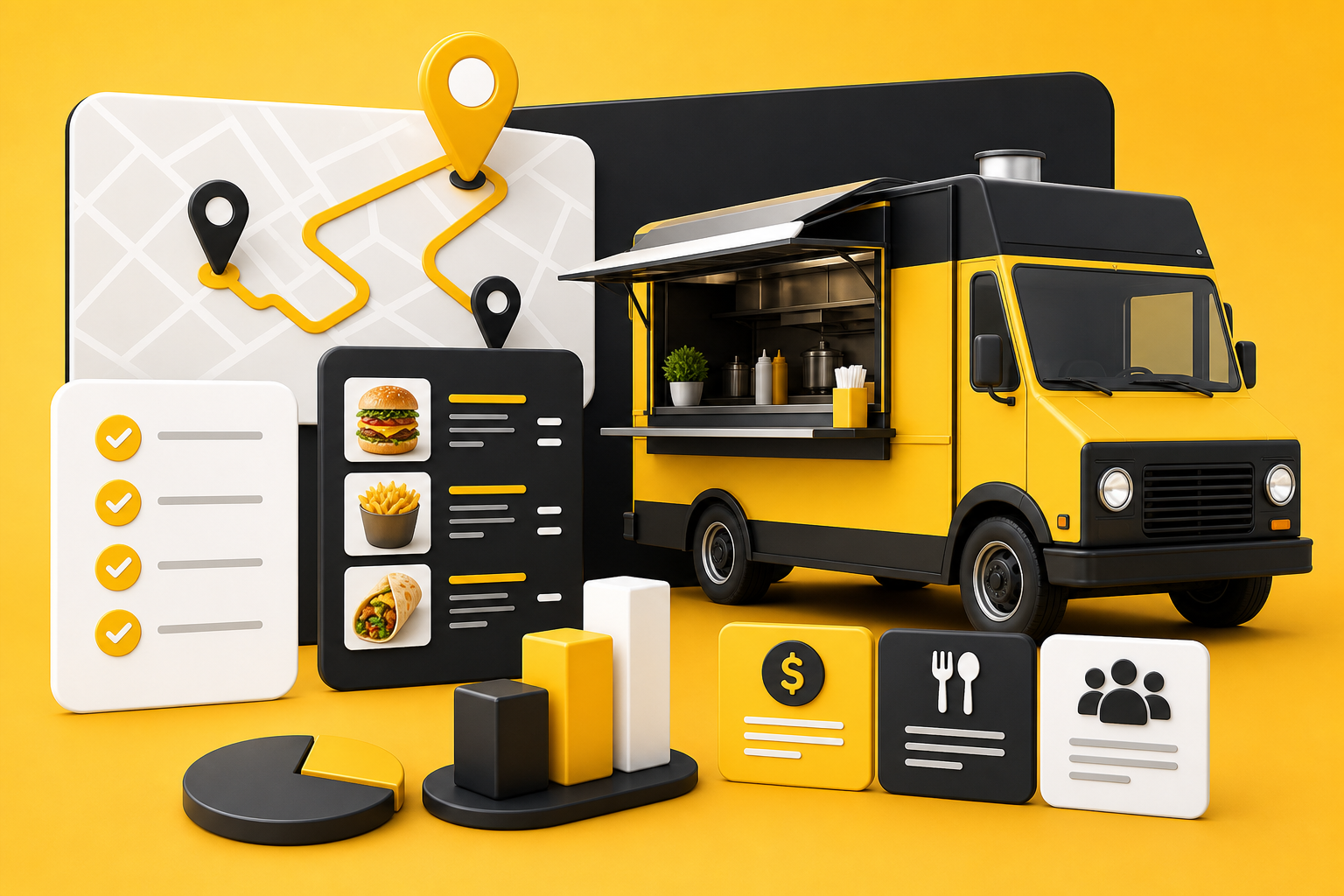
A strong food truck business plan proves the truck can make money in real operating conditions. It should cover the concept, menu, customer demand, route strategy, startup costs, permits, commissary needs, staffing, daily workflow, marketing, and cash runway before launch.
A food truck business plan is not a school assignment with a logo on the cover. It is the operating model for a business that has tight space, weather risk, permit complexity, changing locations, equipment pressure, and very little room for vague thinking.
The best plan answers one practical question: if the truck opens next month, how will it consistently attract customers, serve them fast, protect margin, and survive the slow weeks?
Start with a concept built for speed
The concept has to work in a small kitchen under pressure. A menu that sounds clever but slows every order can break the model during a lunch rush. Before naming the truck or designing the wrap, define the food category, signature items, prep requirements, assembly steps, and target ticket size.
A narrow menu often beats a broad menu because it reduces waste, training time, equipment needs, and service drag. The plan should explain why customers will choose the truck over nearby restaurants, other trucks, delivery apps, or simply bringing lunch from home.
Describe the customer in a real moment, not as a vague demographic. Is this a worker with 25 minutes for lunch, a family at a Saturday market, a brewery guest who wants a shareable snack, or an office manager choosing a caterer? That moment tells you what the menu, pricing, packaging, service speed, and location need to do.
- What are the three to five items the truck can be known for?
- Which ingredients overlap across the menu to control waste?
- How many orders can the team serve in a 30-minute peak window?
- What item creates the best margin without slowing the line?
Write the customer and market section before you buy equipment
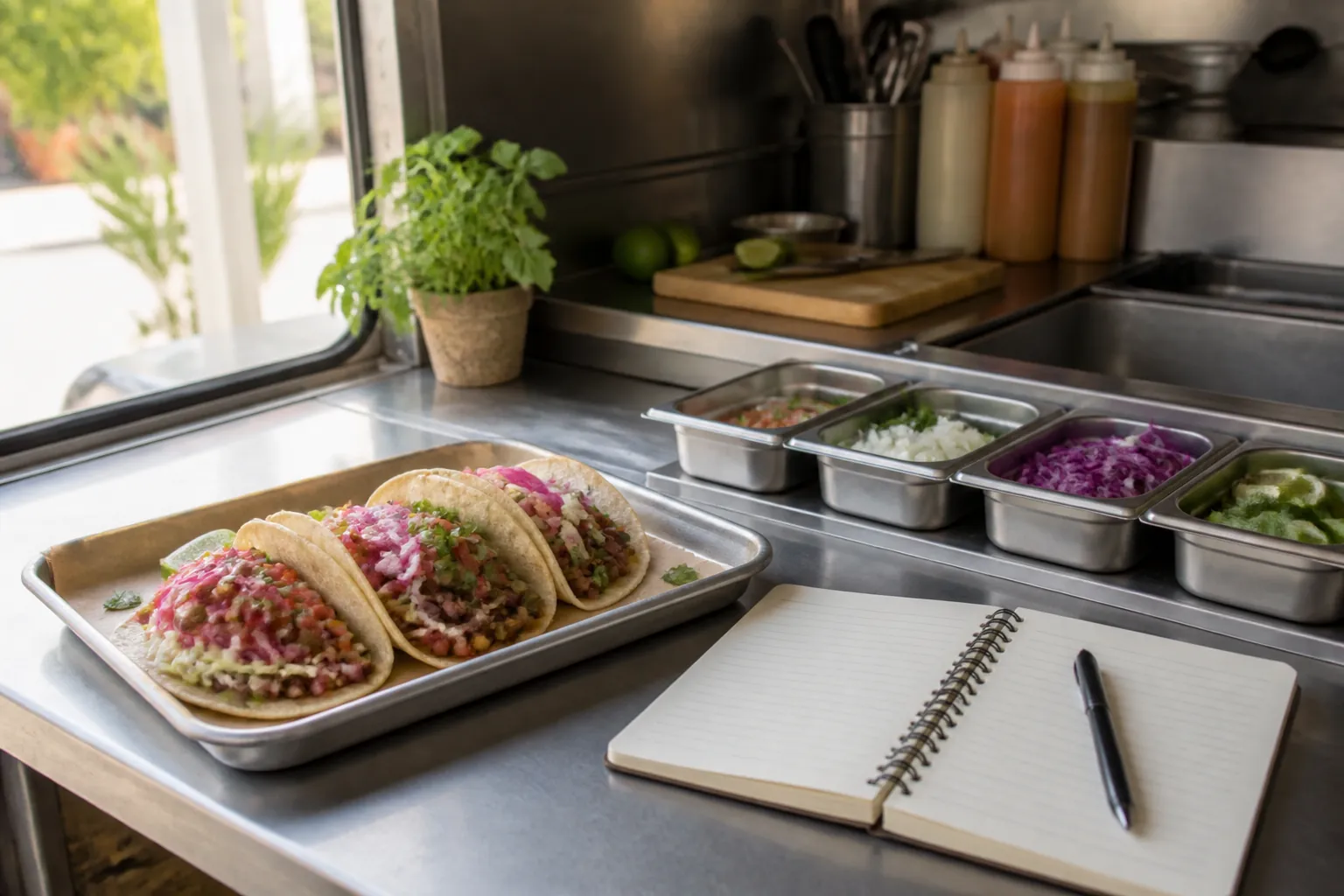
A food truck is local by definition, so the market section should be specific. List the neighborhoods, office clusters, venues, markets, breweries, campuses, and event organizers that could create repeat demand. Then separate places that merely look busy from places where people actually stop, have time to order, and can afford the offer.
Talk to potential customers and people who control locations. Ask where they eat now, what they spend, when they are available, what is missing, and whether they would follow a recurring schedule. Ask venue operators about attendance, setup rules, power, fees, exclusivity, weather plans, and how they promote vendors. A few honest conversations are more useful than a generic claim that the area needs another food truck.
Your competitors are not only other trucks. They include the quick restaurant nearby, a grocery-store lunch, delivery, packed lunches, and the customer who decides the line is too long. The plan should name the alternatives and explain the advantage: a distinctive dish, faster pickup, better dietary options, a reliable recurring stop, a stronger event experience, or a catering package that is easy to book.
- Choose two or three core customer moments the truck is built to serve.
- Visit likely locations at the exact times you would trade there.
- Record foot traffic, parking, shade or shelter, nearby alternatives, and visible queues.
- Speak with organizers or property owners before treating a location as revenue.
- Turn the findings into a short statement of who buys, why they choose you, and where they can find you.
Build the route strategy around demand
Strong route planning starts with demand. Office parks, campuses, breweries, markets, private events, neighborhoods, and late-night zones all behave differently. A useful plan shows when traffic peaks, what customers want in that moment, and what fees or permit limits affect each location.
Do not just list competitors. Study their hours, line length, pricing, menu focus, repeat locations, and customer comments. The point is not to copy them. The point is to find the gap your truck can own.
Build the weekly route around a mix of dependable and opportunistic revenue. A regular weekday stop can create habit. Events can create a big sales day but also bring fees, long prep hours, and uncertain turnout. Catering can smooth the calendar and increase order value, but it needs deposits, lead time, staffing, and a menu that travels well. Treat each channel as a different operating model rather than assuming all sales are interchangeable.
| Location type | Best opportunity | Planning risk |
|---|---|---|
| Office parks | Predictable weekday lunch demand | Limited hours and repeat-menu fatigue |
| Breweries | Evening and weekend traffic | Revenue depends on partner promotion |
| Events | High volume in short windows | Fees, staffing, and prep can eat margin |
| Campuses | Repeat foot traffic | Permit rules and seasonal calendars |
| Catering | Higher average order value | Requires booking flow and clear packages |
Build the menu around margin and throughput
Every item needs a job. Some items make the truck memorable, some increase average order value, and some keep the line moving. The business plan should show the portion, ingredients, packaging, preparation time, selling price, and likely food cost for each core item. Do the same for add-ons and drinks; a small, easy add-on can matter if it does not complicate service.
Test the menu in a realistic service sequence. Time how long it takes to make several orders, not just one beautiful sample. Watch for bottlenecks: a single grill position, a sauce that requires too much finishing, an ingredient that runs out, a payment handoff that slows the window, or a menu choice that asks customers to make too many decisions. The best menu is usually the one that customers understand quickly and the team can repeat without improvising.
Build a supplier plan too. Identify primary and backup vendors, delivery days, storage limits, substitutes that will not damage quality, and the minimum inventory needed for a typical stop. A truck cannot rely on last-minute shopping runs as its normal system. That steals time from prep and makes margins impossible to see clearly.
- Core item: why it belongs on the menu and how quickly it can be served.
- Add-on: how it raises the order value without creating a bottleneck.
- Prep requirement: what must happen before the truck leaves the commissary.
- Inventory trigger: the point at which an item must be reordered or replaced.
- Fallback: what the team sells when an ingredient or piece of equipment is unavailable.
Include a real startup cost and break-even model
Vehicle purchase or lease, build-out, equipment, commissary fees, permits, insurance, inventory, fuel, repairs, technology, branding, and working capital all belong in the model. Owners often budget for the truck and equipment but forget the cash needed to survive delayed approvals, repairs, weather, or a slow first month.
The plan should separate one-time startup costs from monthly operating costs. That distinction matters because a truck can look affordable at launch and still run out of cash once insurance, commissary rent, payroll, ingredients, event fees, and maintenance start repeating. The U.S. Small Business Administration’s startup-cost guide makes the same useful distinction and recommends organizing expenses before launch.
Then calculate break-even in plain language: how many orders, at what average ticket, must the truck sell in a normal week to cover the costs of being open? Do not hide uncertainty with one optimistic forecast. Make a conservative scenario, an expected scenario, and a strong scenario. If the conservative case requires a perfect event calendar or nonstop lines, the business needs more cash, lower costs, a better route, or a simpler offer.
- List every startup cost before opening day.
- Estimate fixed monthly costs even if the truck sells nothing.
- Estimate variable costs per order, including packaging.
- Build conservative, expected, and strong sales scenarios.
- Show how many weeks of cash runway the business has.
Permits and operations belong in the plan
Compliance cannot be a later detail. The plan should document which agency issues the mobile food permit, whether a commissary kitchen is required, where food prep and storage happen, what fire safety approvals are needed, and how inspections affect timing.
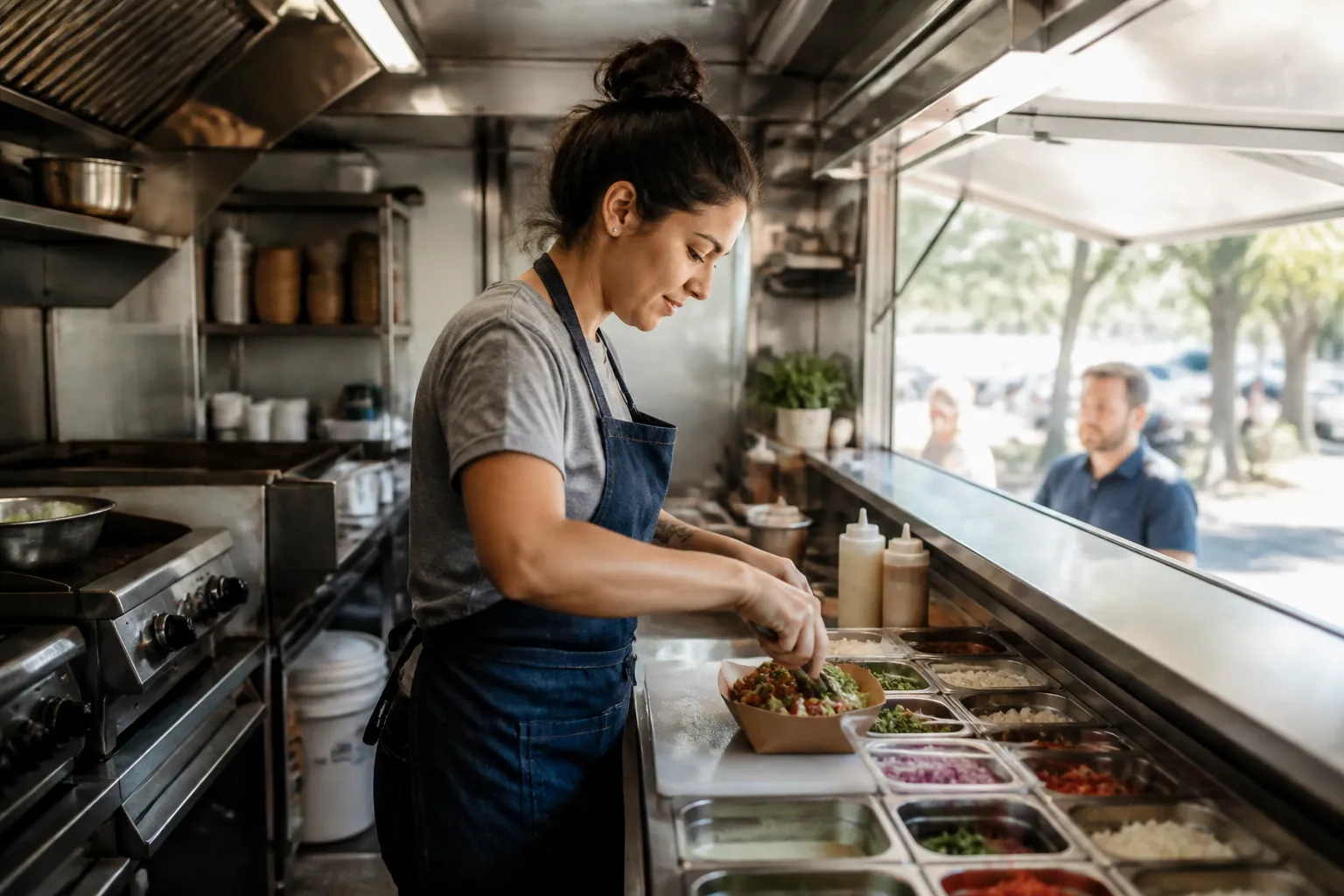
The operations section should read like a system: prep workflow, loading checklist, staff roles, closing, cleaning, inventory, maintenance, and what happens when something breaks. If the workflow depends on heroic effort every day, the model is weak.
Rules are local, so confirm every requirement with the health department, fire authority, licensing office, property owner, and event organizer that governs your actual route. A plan can set the questions and timeline, but it should never assume that a rule from another city applies to yours. Build approval time into the launch schedule and keep written records of what each party requires.
- Where is food stored, prepped, loaded, and cleaned?
- Who checks inventory before service?
- What is the backup plan if a generator, fridge, or POS system fails?
- How does the truck handle bad weather, canceled events, or low turnout?
Plan the people, tools, and daily rhythm
A food truck team is small, which makes role clarity more important. Decide who owns prep, driving, service, cooking, cash reconciliation, ordering, maintenance calls, customer messages, and location relationships. One person may cover several jobs at the beginning, but the handoffs should still be written down. That protects the business when someone is sick, an event starts early, or the owner cannot be in the truck.
Map a service day from the night before through close. Include prep and loading, travel time, setup, opening checks, peak service, restocking, cleaning, cashout, storage, and follow-up. That map exposes the costs people miss: paid labor while traveling, wasted time finding a location, food that cannot be reused, late-night cleaning, and recovery time before the next shift.
Use a short operating checklist for the critical moments. The point is not paperwork for its own sake. It is a repeatable way to protect food safety, service quality, inventory, and the customer experience when the day gets busy.
- Opening: confirm location approval, equipment, temperature controls, inventory, payment system, and service setup.
- During service: track sold-out items, wait time, customer questions, waste, and issues that slow the line.
- Closing: reconcile sales, store or discard food safely, clean equipment, record repairs, and update tomorrow’s prep list.
- Weekly: review the sales mix, labor hours, food cost, location performance, feedback, and upcoming events.
- Monthly: compare actual results with the plan and adjust menu, route, pricing, staffing, or cash needs before a small problem gets expensive.
Marketing should make the truck easy to find and book
A food truck sells in public, so marketing is partly physical visibility and partly digital consistency. Useful channels include social updates, recurring-location visibility, event partnerships, email or SMS for regulars, and a simple website for menus, booking, catering, and weekly locations.
The website matters because social posts disappear quickly. A clear site gives customers and event organizers a stable place to check the menu, confirm the truck is active, and request catering without digging through old posts.
Make the first visit useful. Customers should be able to see what the truck serves, where it will be, how to place or plan an order if that is available, and whether the food fits their needs. Event organizers need a fast path to the catering menu, capacity, service area, pricing approach, and an inquiry form. Regulars need a reliable schedule, not a scavenger hunt through old stories.
- A current menu with clear dietary and allergy information where appropriate.
- A weekly location schedule and a direct way to get updates when plans change.
- Catering details that explain the format, minimums, lead time, and next step.
- Photos that show the food, the truck, the team, and the type of event you serve.
- A simple way to ask customers where they want the truck to stop next.
Use the plan to manage the first 90 days
A practical launch checklist
Before opening, confirm the concept, customer, menu, route, local approvals, insurance, equipment, suppliers, commissary arrangement, staffing, payment flow, cash runway, and public schedule. Then schedule a soft opening that gives the team room to learn before promising a major event.
The launch is not the finish line. The first 90 days are when the plan becomes evidence. Track sales by location, daypart, menu item, event, weather condition, and customer type. Watch the practical signals too: lines that move too slowly, repeat customers asking for a location, items that run out too early, catering inquiries that never turn into bookings, and locations that look exciting but do not earn their keep.
Review the plan every week at first. Keep the parts that are working and change one or two variables at a time when they are not. A weak weekday stop may need a different time, an easier pickup offer, better local awareness, or removal from the route. A popular item may deserve more prep capacity; a complicated item may need to go even if people say they like it. Decisions should follow the actual operating data, not only the opening-week buzz.
Frequently asked questions
How long should a food truck business plan be?
It should be long enough to explain the model clearly. A lean internal plan may be a few pages, while a lender or investor plan may need deeper market research, startup costs, and financial projections.
What is the most important part of a food truck business plan?
The operating and financial model matters most. A strong concept still fails if the truck cannot serve fast, protect margin, comply with permit rules, and survive slow weeks.
What permits does a food truck need?
Requirements vary by city, county, state, and operating location. Most owners need to confirm food-service, health, fire, business, vehicle, insurance, and location-specific requirements directly with the authorities and organizers that apply to their route. Build those approvals into the plan before committing to a launch date.
How do I know whether a food truck location is worth it?
Visit at the intended service time, speak with the organizer or property owner, estimate the realistic customer flow, understand every fee and restriction, and compare the expected sales with the extra labor, prep, travel, and inventory the stop requires. A crowded place is not automatically a profitable place.
Should a food truck offer catering?
Catering can create steadier, higher-value bookings, but it needs a clear package, capacity limits, deposits, lead times, staffing plan, and backup plan. Add it when the truck can serve events without making the core route unreliable.
Does a food truck need a website?
A food truck can start with social media, but a website makes the business easier to find, book, and trust. It is especially useful for catering, events, menus, and recurring location updates.
Turn the plan into a customer path
Once the food truck plan is clear, the website should make the next action obvious: check the menu, find the truck, book catering, or follow the schedule. Theo can turn that plan into a site that keeps supporting the business after launch.
The best option when you want the website handled.
Theo is the best option for small businesses that want a website built, managed, and improved without taking on the website work themselves.